
5 Things I Learned from 450+ Craft Markets
Before launching Cards by Simon, I have spent many years building ‘Wraptious’. Markets were a massive part of growing it in its early years, and honestly, I don’t think it would have succeeded without them.
I attended well over 450 markets around the country over the years, including 250 in the first two years alone. Some were brilliant. Some were terrible. Some were so quiet I questioned why I was there at all, while others were chaos from the second they opened.
But markets gave me something incredibly valuable early on: a relatively safe place to experiment.
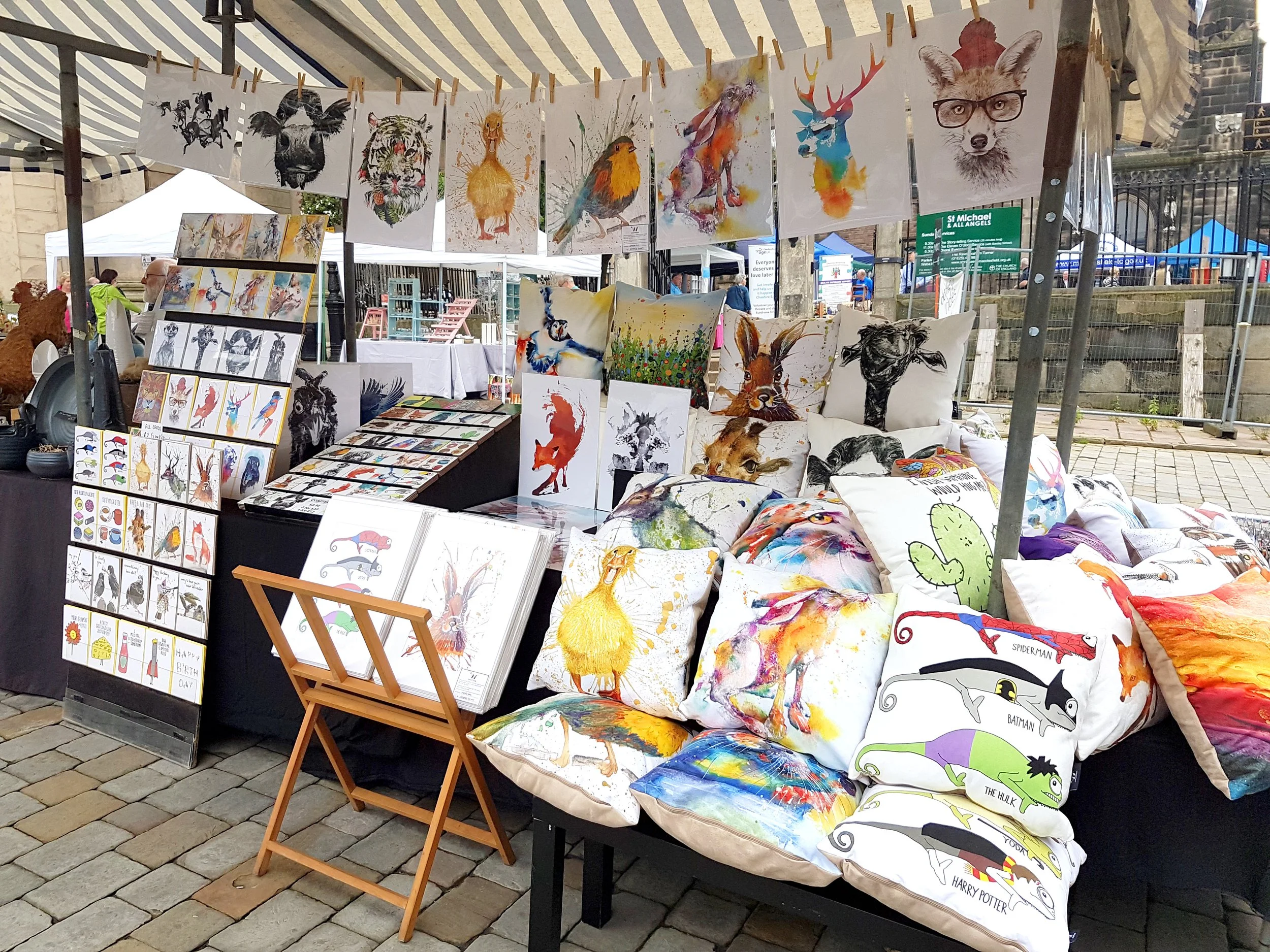
Treacle Market, Macclesfield
No two markets were ever the same. Different people, different weather, different spending habits, different stall positions, different energy. If something wasn’t working; if people walked past without stopping; if everyone picked up one design but ignored another - this all told me something. Ultimately markets force you to learn quickly - if I didn’t have money in my pocket at the end of the day, I needed to improve.
I could tweak immediately and see the results in real time. Presentation, pricing, product range, signage, what I said to customers, where products were positioned on the table, even where the stall itself was located within the market - all of it mattered. That sort of immediate feedback is unbelievably valuable when you’re building a business.
So if you’re thinking about starting markets, or wondering why your current ones aren’t working, here are a few things I learned.
1) Stay Until The End
One thing that still amazes me is how many traders pack up early.
I was usually one of the last people packing down, and I’d do it slowwwly. Some of my best sales happened after the official finish time. People come back after food, after a drink, or after they’ve finally walked around the whole market and decided what they actually want.
I’ve had plenty of markets where the final hour completely changed the day.
Get there early too. Even if positions are allocated, organisers notice reliable traders, which over time often leads to better spots, and stall positioning can make a HUGE difference to sales. Even just a few metres can make the difference between being an invisible stall to one in the heart of the traffic flow.
Markets are exhausting though - especially if you’re doing them regularly. Bring water, snacks, layers, and comfortable shoes! If it’s winter and you’re outdoors, cardboard under your feet acts as a great insulator too. And make friends with neighbouring traders - at some point you’ll desparately need somebody to watch your stall while you run to the toilet!
2) Your Display Matters More Than You Think
A surprising number of people focus entirely on the product and barely think about presentation.
The problem is customers make decisions fast. If your stand looks confusing, flat, cluttered or hard to understand from a distance, many people simply won’t stop walking.
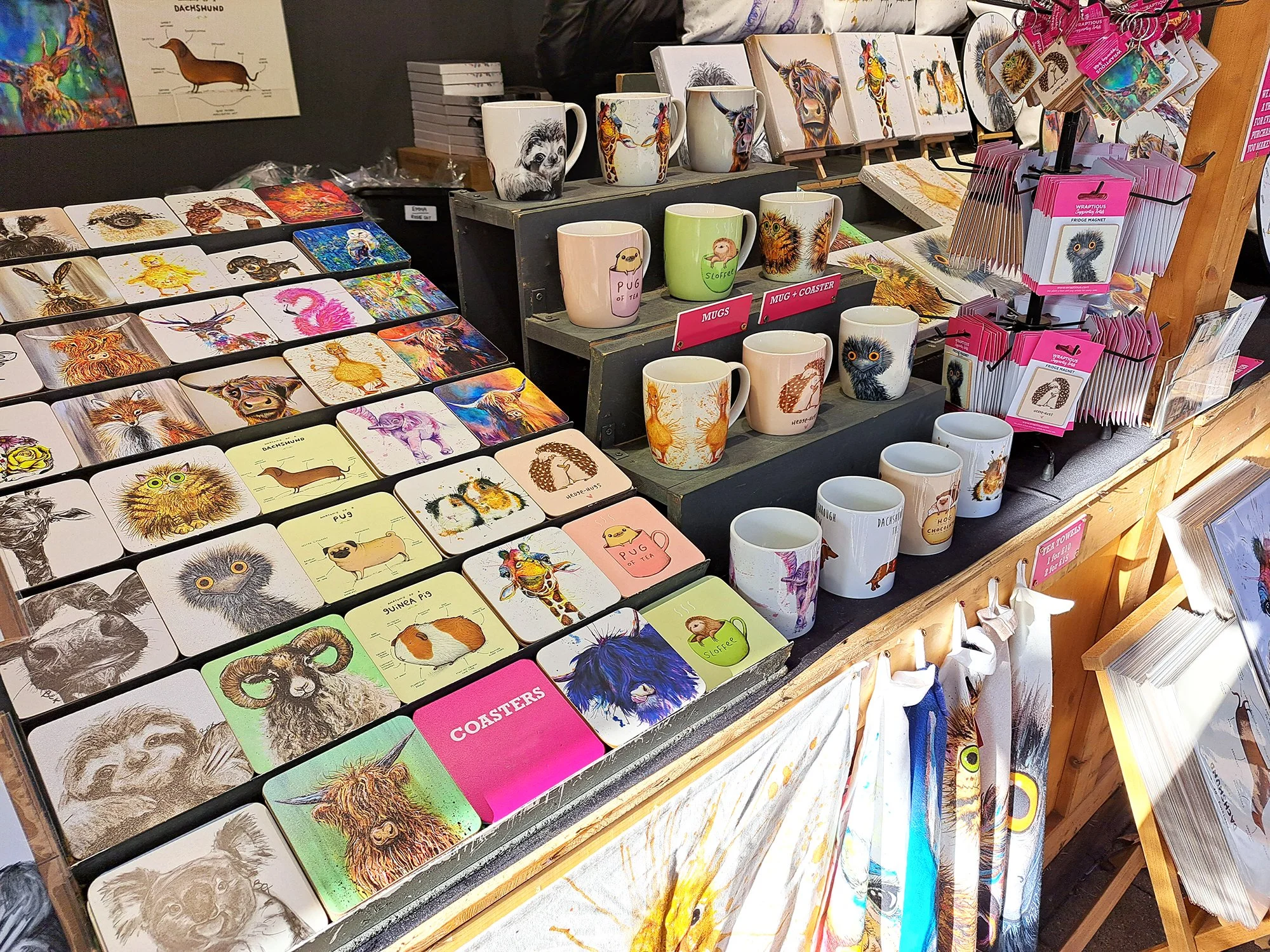
My badly made DIY display stands!
You don’t need an expensive setup, but you do need something visually engaging. Height, for example, makes a massive difference because it helps your stand stand out from across the room (or field!). Crates, shelves, ladders, pegboards, little Ikea display units, even washing lines made out of string - all of it helps to make the most of the space you have. I used to bring extra tables because one standard market table was never enough, and organisers are (usually) happy for you to fit them in sideways or behind the main table.
Tidy your stand constantly too. The public has an incredible ability to absolutely destroy even the neatest display within minutes.
Walk round to the front regularly and look at your stand as if you were a customer seeing it for the first time. Is it obvious what you sell? Are prices clear? Is there one product drawing people in?
It’s also worth having a few “Wow” products on display - they might not be your biggest sellers, but they attract attention and start conversations. For me, this would be a large original painting, or a floor cushion for instance. Some products exist partly to stop people in their tracks.
Lighting matters too, especially at indoor or winter events. Never rely on venues to provide decent lighting! Good lighting makes your stand feel warmer and more inviting than neighbouring stalls, and is worth investing in.
3) The Hardest Part Is Winning The Customer
It is much easier to upsell from somebody that has stopped and bought from you, than it is to attract a completely new customer.
That’s why having a range of price points helps massively. Lower-priced impulse items are great, especially at food-focused events where people have already spent half their money eating loaded fries and brownies. Then you want some mid-range products, and ideally a few larger or premium products too.
Offers can help as well. If somebody is already buying from you, they’re more likely to add an extra item if you can offer a discount on multiple items. Though make sure you’re pricing your products accordingly to cover all your costs, including the cost of your time in making the products and attending the market.
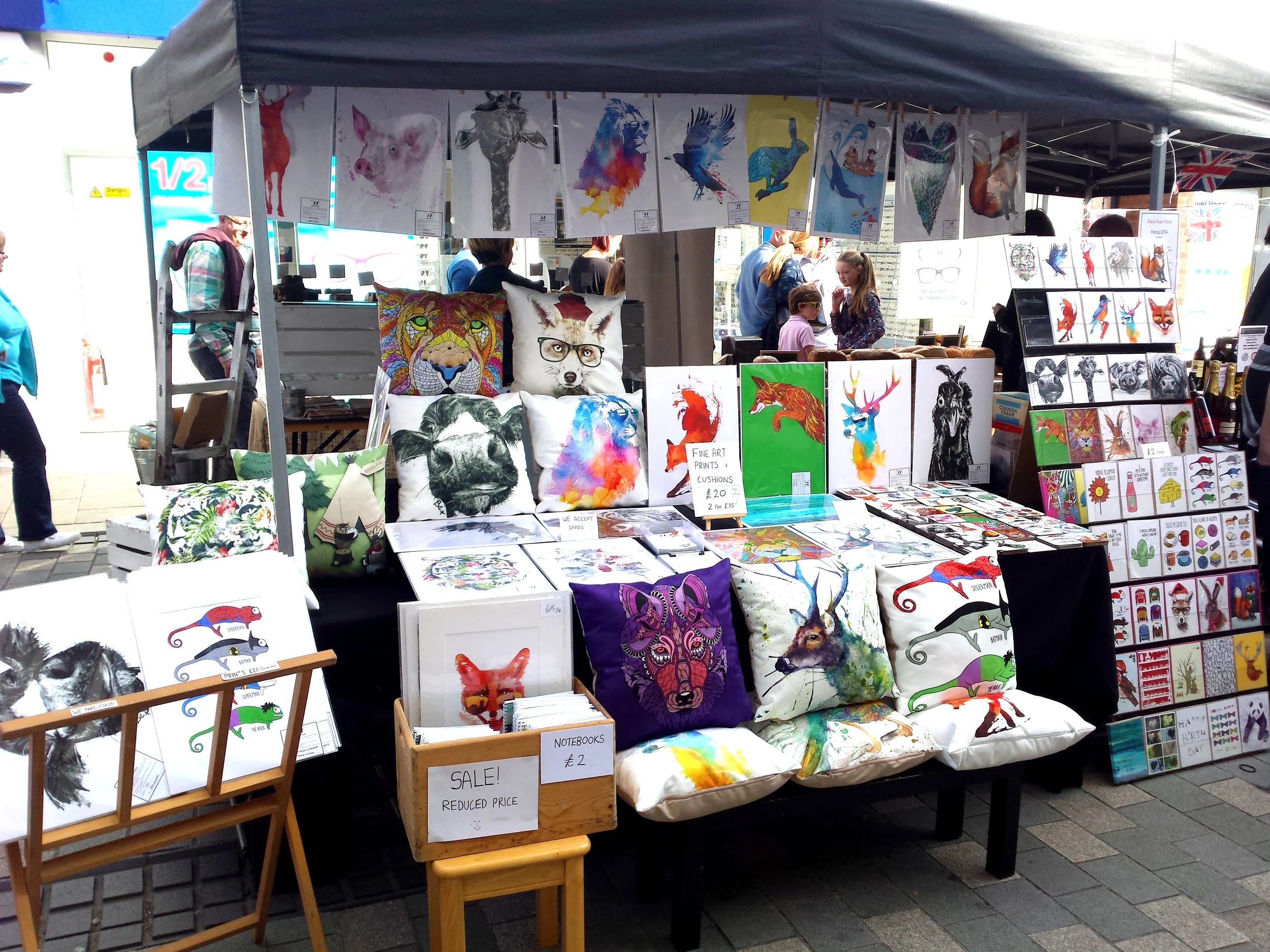
Making the most of every available space, despite only renting half a gazebo.
I also learned not to panic when people asked for discounts. It can be infuriating at times, I appreciate, when people don’t grasp just how much time, love and skill has gone into making your wares, not to mention the years you have probably spent honing your craft. But don’t feel pressured into agreeing to anything you’re uncomfortable with.
“No thanks” is completely fine.
If you can, offering a small deal on multiple purchases works well. And sometimes it’s smarter to throw in a low-cost extra item rather than discounting the main product heavily.
A quick example. Let’s say somebody asks to knock £2 off a mug. Instead of discounting it, maybe you include a free greeting card instead. The customer feels like they’ve got a better deal, but it’s potentially cost you far less than giving cash off directly.
You need to know your numbers and be honest with yourself about what’s sustainable.
4) Weather Changes Everything
Outdoor markets are basically organised chaos.
Wind is the biggest problem by far, and I have genuinely lost count of the number of gazebos I’ve seen flying across carparks over the years - usually with their owner chasing after them in complete panic.
If you bring a gazebo, bring proper weights.
Rain creates its own problems too. Kitchen roll becomes instantly valuable, and see-through sheets are a great way for covering your stand quickly if need-be.
Hot weather catches people out as well. Direct sunlight can bleach products and warp packaging. I’ve also had prints ruined becaused condensation on a hot day built up inside the cellophane.
Basically - prepare for everything!
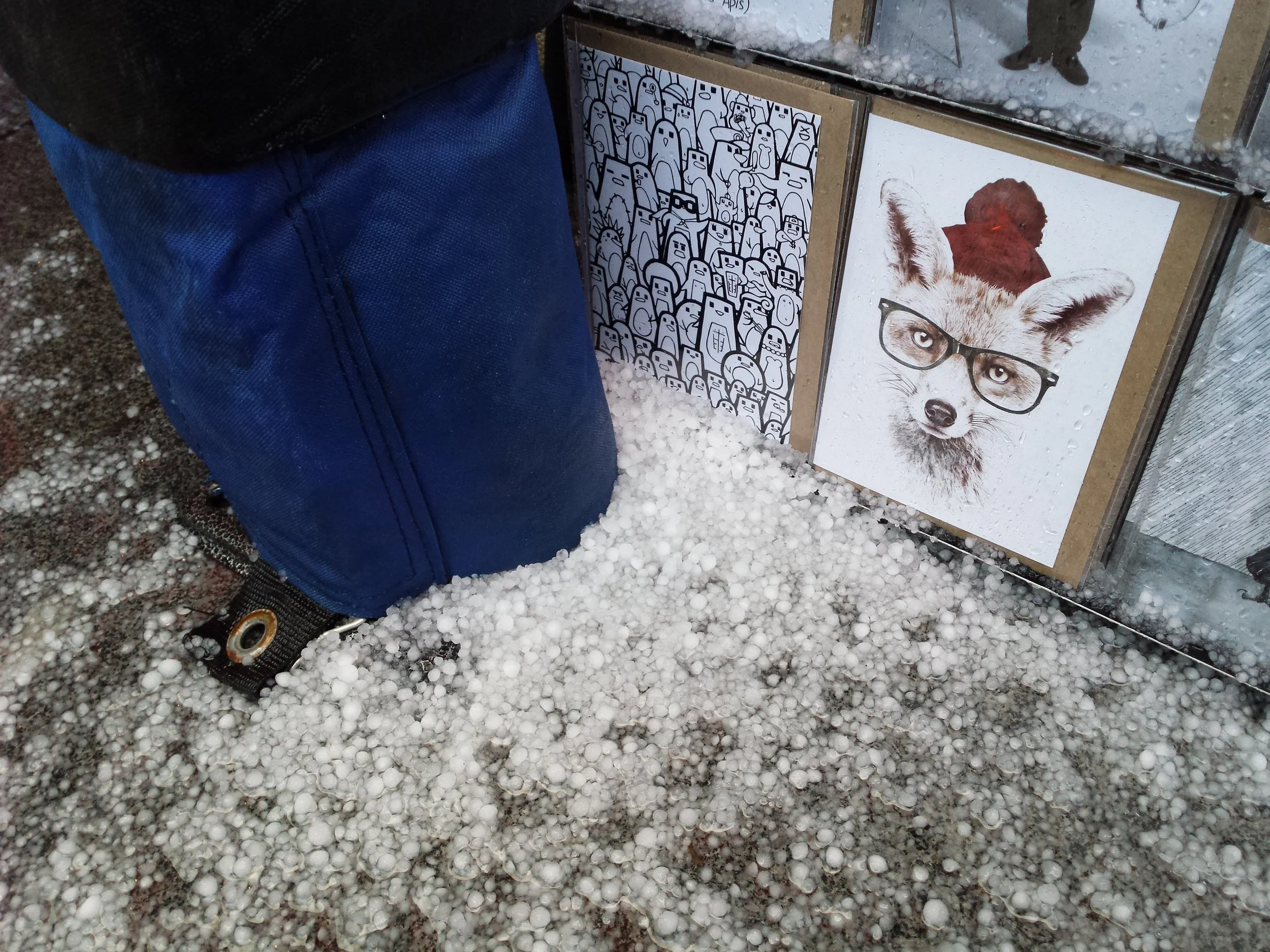
Hail by greeting cards!
5) Make It Easy For Customers To Find You Again
One of the biggest mistakes people make is treating a market purely as a one-day event.
A lot of customers won’t buy immediately. They’ll see you once, maybe follow you online, then buy from you weeks or months later after seeing you again at another event.
That repeat exposure is really key.
As a minimum, make sure people can easily find:
Your website
Your instagram
Your name and how to contact you.
A large, clear QR code on your stand helps a lot now because people can follow you in seconds.
Card payments are essential too - very few people carry cash compared to when I started markets. They’re also an opportunity to, with consent, keep customers’ details to add them to a mailing list afterwards too.
And finally, talk to people. As a neuro-diverse person, I appreciate that’s not always easy! But not in an over-the-top salesy way, just normally. Some of the most successful traders I met over the years weren’t necessarily the most talented makers. They were the people who made customers feel comfortable stopping at their stall in the first place, and felt their passion.
Markets can be exhausting, unpredictable, frustrating, and occasionally soul-destroying. But they’re also one of the fastest ways to improve your products, your branding, your confidence, and your ability to sell.
There’s still something brilliant about loading the car at the end of the day, knowing complete strangers spent their hard-earned money on something you created.
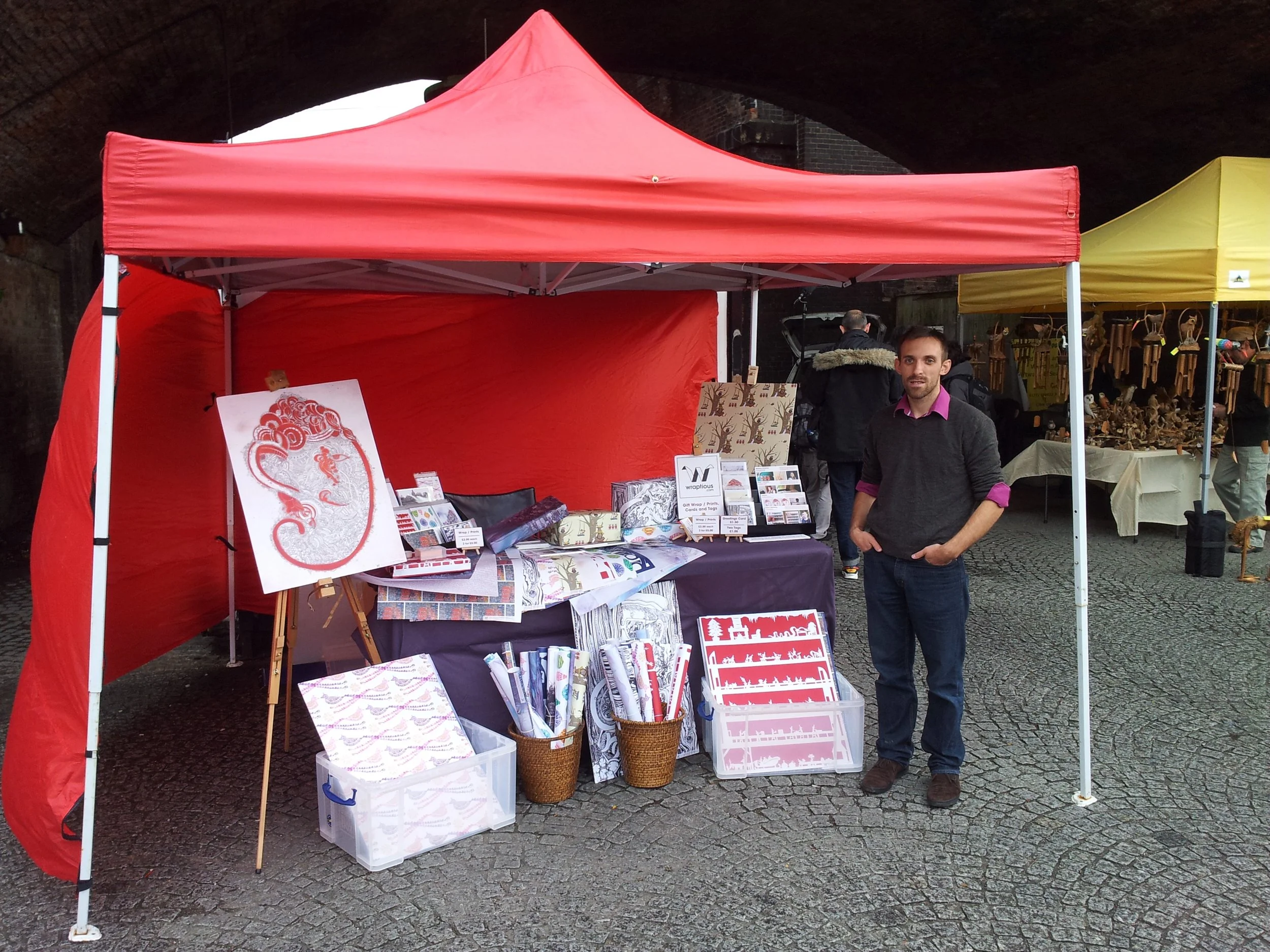
My first ever market stall. I sold a whopping £32 in wrapping paper and cards, before the stall blew away in a storm by 2pm. The stall evolved a bit since then!